
5. What is Mibyo in Kampo?
Overview
Mibyo (未病)—translated as “sub-health,” “not-yet illness,” or “latent illness”—is a foundational idea in Japanese preventive healthcare. Originating in Eastern medicine, the concept has gained broader recognition in modern Western medical practice in Japan, especially after Japan’s Ministry of Health, Labour and Welfare (MHLW) introduced national health-promotion initiatives in 2017.
Mibyo describes the condition many people experience when their health doesn’t feel quite right—persistent fatigue, occasional headaches, digestive discomfort, or emotional imbalance—yet medical tests show nothing abnormal. Rather than dismissing these subtle signs, Kampo medicine views them as early indicators of imbalance. Addressing these signals early helps prevent the progression to more serious illness and encourages a proactive, holistic approach to well-being.
Western health checkups focus primarily on detecting disease at an early stage, while Mibyo emphasizes early awareness: noticing changes in the body, understanding their meaning, and responding through self-care, lifestyle adjustments, and supportive therapies. This perspective encourages people to stay mindful of their physical, mental, and emotional states, creating a habit of caring for health before illness develops.
Mibyo: The Spectrum Between Health and Illness
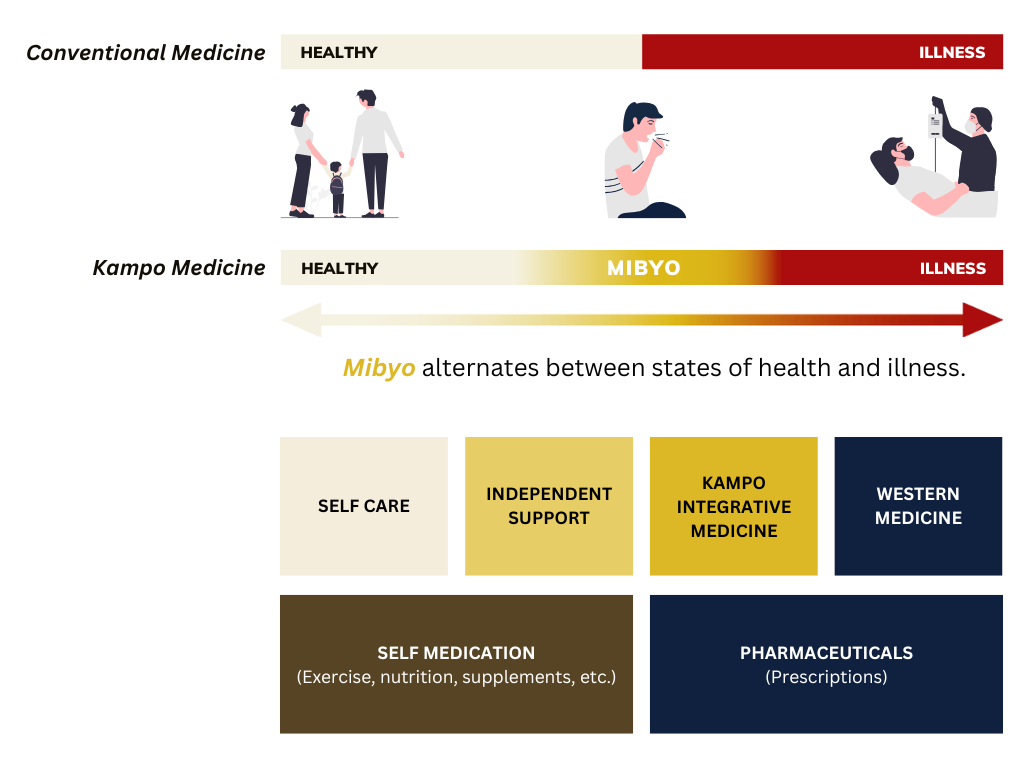
In conventional medicine, health and illness are typically viewed as two distinct states. Symptoms become relevant only when they are measurable or diagnosable. Kampo medicine, however, recognizes a broad spectrum between these two points. Mibyo sits in this middle zone—a space where the body sends quiet signals long before disease emerges.
The image illustrates this spectrum clearly: health gradually transitions into Mibyo, and Mibyo into illness. This middle state is dynamic. With proper care, one can return toward health; without it, the body may drift toward illness. Kampo medicine aims to guide individuals back to balance during this transitional phase.
The visual also shows how different forms of care align with this spectrum. Self-care practices such as nutrition, sleep, and exercise support overall wellness. As signs of Mibyo appear, people may turn to integrative support, including Kampo herbal formulations and personalized lifestyle guidance. When a condition becomes clinically diagnosable, Western medicine and pharmaceuticals take precedence.
Key Aspects of Mibyo
- Prevention Focus: Mibyo emphasizes preventive care by aiming to detect and correct imbalances in the body before they manifest as diseases. Healthcare professionals monitor subtle signs and symptoms that may indicate an emerging health issue.
- Holistic Approach: Kampo medicine, deeply rooted in the concept of Mibyo, looks at the body as a whole rather than focusing on isolated symptoms. Treatment involves lifestyle changes, diet adjustments, and herbal medicine to maintain overall well-being.
- Early Detection: Regular health check-ups and consultations help in the early detection of potential health problems, which can lead to early intervention, improving health outcomes and reducing the risk of chronic illnesses.
- Integrative Medicine: Mibyo is integrated into both conventional and traditional medicine practices in Japan. Medical professionals use both modern diagnostic tools and traditional methods, such as pulse diagnosis and tongue examination, to identify Mibyo.
- Patient Education: Educating patients about Mibyo is essential. They are encouraged to be aware of their bodies and seek medical advice at the first sign of discomfort, which helps in maintaining a healthy lifestyle and preventing diseases.
Examples of Mibyo Symptoms
- Fatigue
- Digestive disturbances
- Poor appetite
- Changing in sleep patterns.
- Neck / Shoulder pain
- Lower back pain
- Cold limbs
- Low energy
- Increased blood pressure, ect.
To detect Mibyo, medical practitioners use various diagnostic methods depending on their specialty. While Western physicians use conventional methods such as screening, risk factor identification, and health monitoring, Kampo physicians use the four diagnostic techniques (Palpation, Observation, Inquiry, and Auscultation) to assess a person’s overall health and identify any imbalances that could lead to illnesses. By identifying and addressing these imbalances, the progression of illness can be prevented, allowing individuals to maintain optimal health and avoid developing chronic conditions.